AI coaching that makes personal growth feel achievable
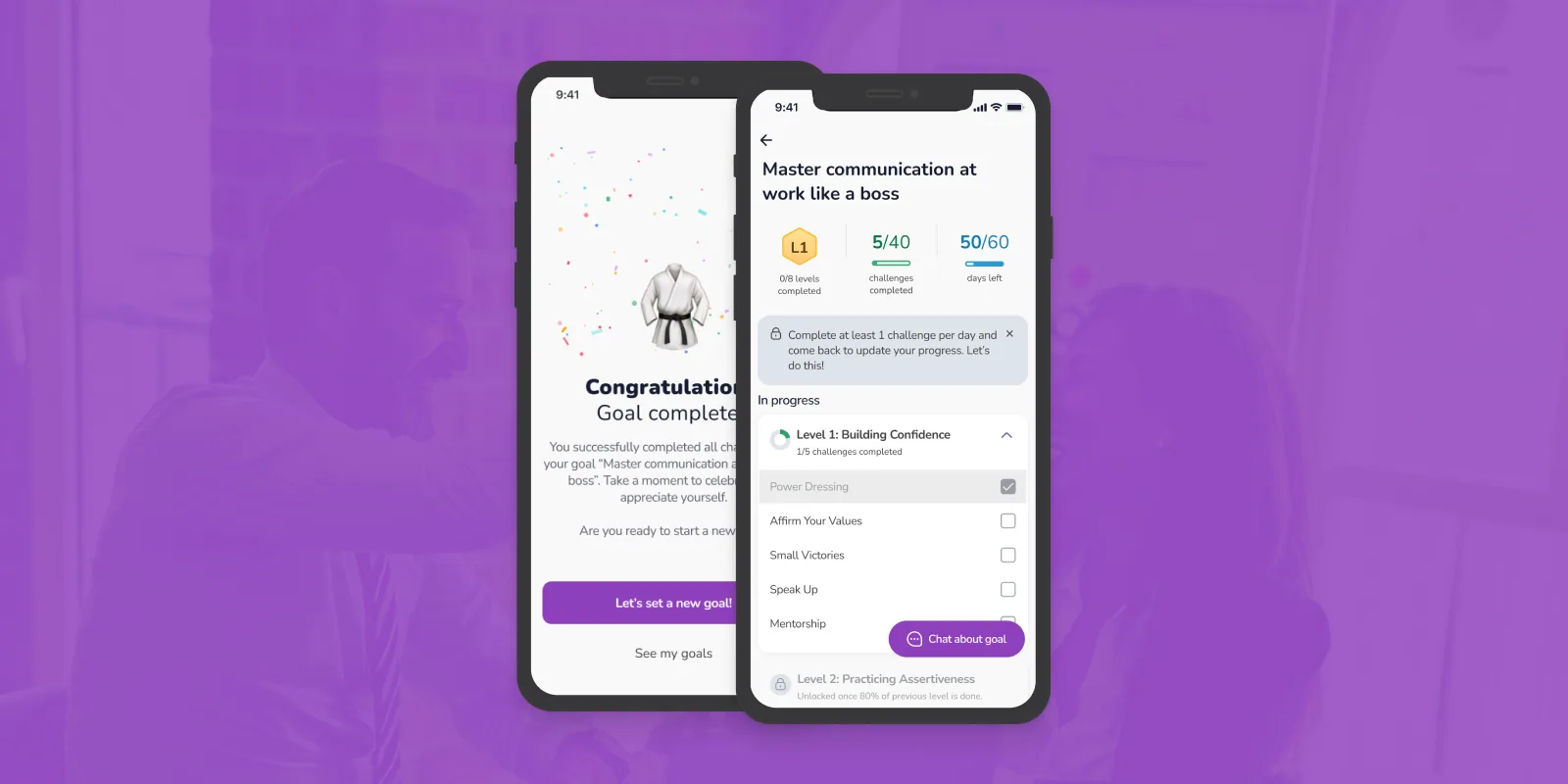
Project Overview: Ayadi · Nuur
Ayadi connects people with qualified, bilingual experts from the Middle East via secure video therapy sessions. The company wanted to explore a new 24/7 emotional support and AI coach service · Nuur.
Lead Product Designer
1 year
2 Designers, 2 Researchers, 1 PM, 2 Developers, CEO
Product Strategy, Research, UX Design, UI Design, Coaching
The problem
People in the Middle East often avoid seeking help due to mental health stigma. Nuur launched as a B2C app offering private AI coaching, and ended up as a soft-skills learning tool in a B2B2C context.
The goal
The app was initially used as a generic chatbot, offering little value beyond casual conversation · more like a free ChatGPT than a coaching tool. We needed to identify one core job users truly cared about to build around it and find product-market fit.
Impact
+15%
Increased weekly retention
Key Product Pivot
From B2C to B2B2C
Improved activation
Assessment-based suggested goals
We thought we were building a mental health coach
When I joined, the app was just a chat. Finding product-market fit is rarely a straight line. In this case, it was a messy, multi-phase journey from B2C to B2B2C. We followed a think, make, check cycle throughout.
Cultural immersion
I dove into research about digital behavior in Arab countries. I learned how central religion is, how collectivist the culture can be, and how much people value privacy, certainty, and trusted institutions. Twitter is big there · which was crucial for interview recruiting.
Coaching the team to interview
I coached a brilliant psychologist on how to run user interviews that uncover real insights. She led the sessions in Arabic, helping us surface key concerns and patterns. We combined findings with AI-based categorization of chat data to understand how people used the app.
Benchmarking the onboarding flow
I explored onboarding patterns and user flows from similar apps, looking at how they built trust, reduced friction, and encouraged users to come back.
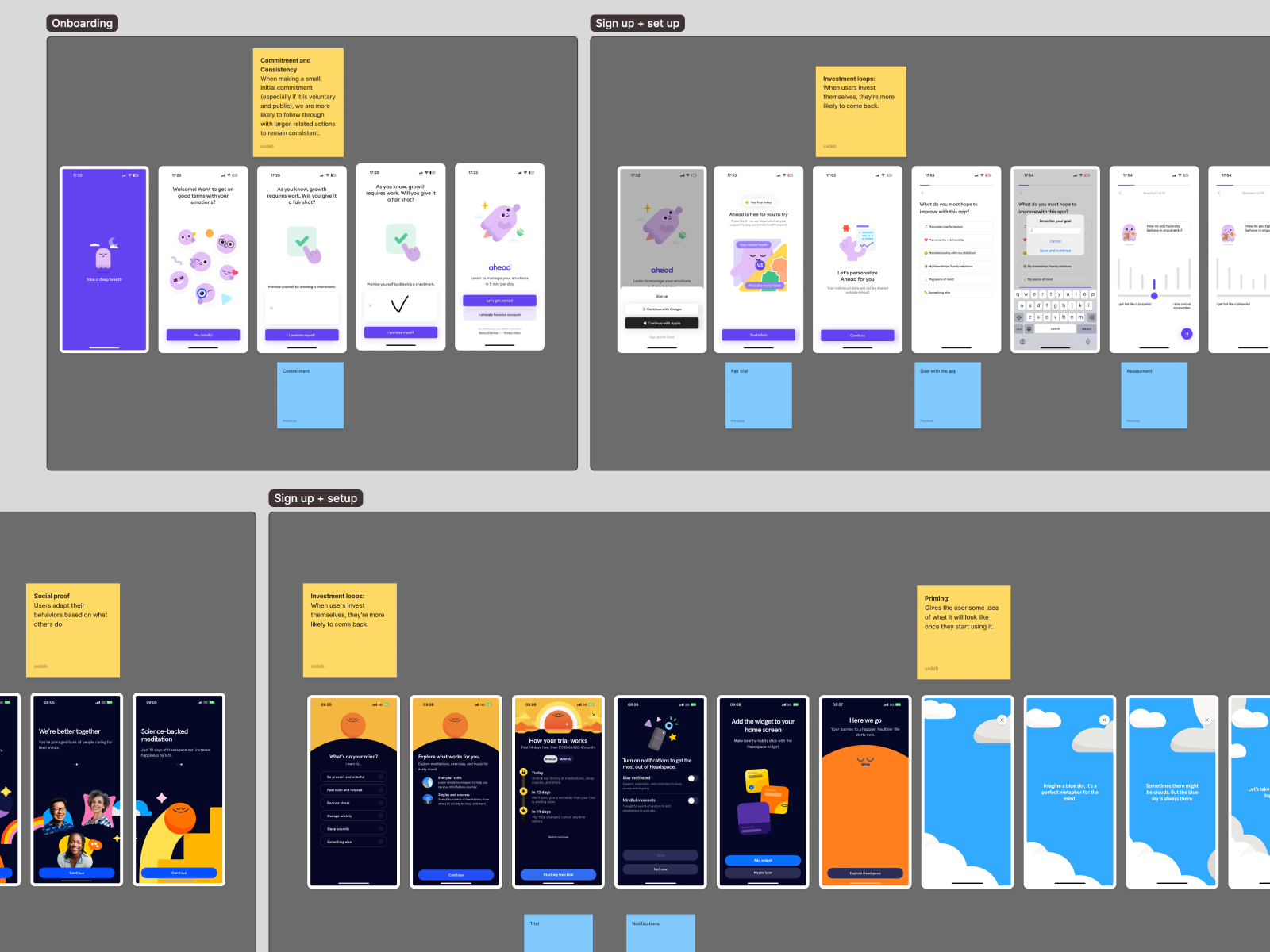
JTBD Workshop with the team
I ran a Jobs-to-be-Done workshop with the team to uncover and align on what people really wanted. We realized most just needed to vent · but that alone wasn't sticky.
Flow: Vent about my day
This flow invited users to talk about their day · by voice or text. Instead of just listening, the app responded with personalized insights to help them reflect and move forward.
People used it, but didn't find it valuable
Despite initial curiosity and usage, less than 30% of users returned after the first week. Users couldn't see how Nuur was different from ChatGPT. We weren't solving anything tangible · and it wasn't something users would pay for.
What if Nuur helped employees grow soft skills?
Stakeholder interviews
We started talking to HR leaders and employees to explore how Nuur could fit into the workplace. They were looking for tools to support mental well-being and professional growth. We used quick wireframes to test ideas.
Learning from existing tools
We looked into the wellness tools people mentioned in interviews · what people liked, what felt useless, and what they completely ignored. It helped us spot gaps and opportunities for something more engaging and personal.
From chatbot to coaching tool
We redesigned Nuur for the workplace. The new direction increased engagement with guided exercises and helped users build more intentional routines.
Flow: Assess my well-being and suggest areas to improve
Users answered a few questions and got a visual of which areas needed attention. The app suggested AI-generated goals, which they could explore and turn into tasks through chat.
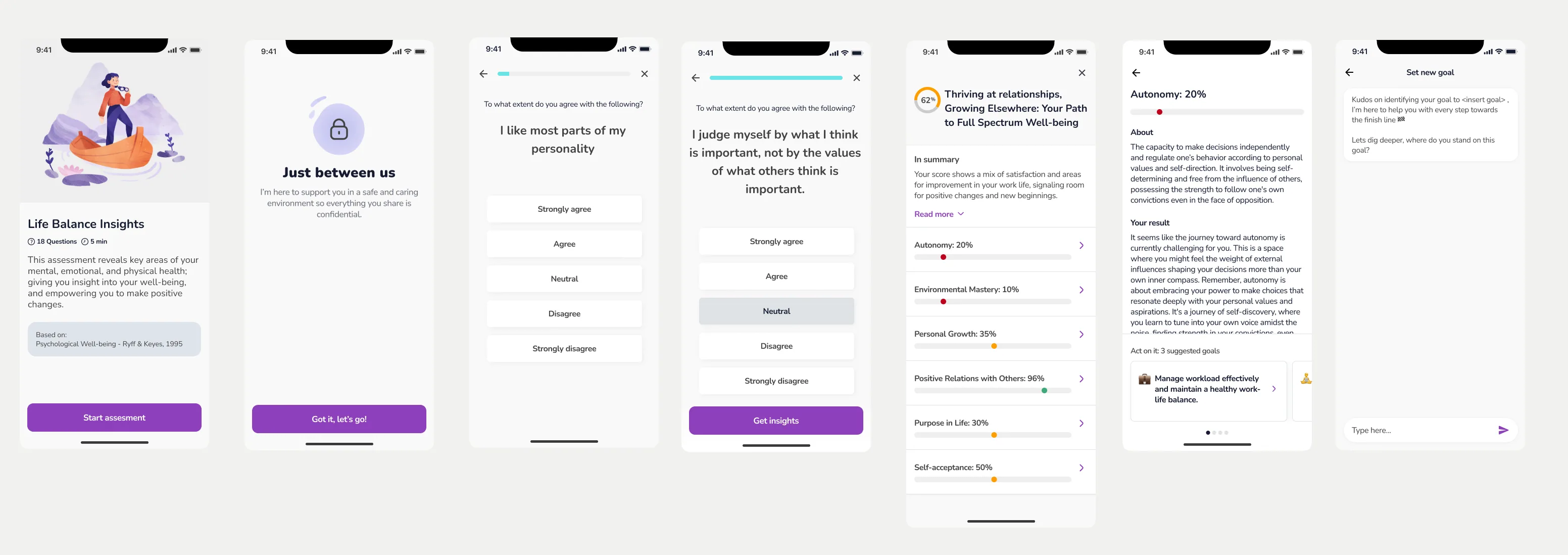
Flow: Explore my goals and tasks
Users could start a goal from the chatbot or their assessment results. Each goal had weekly levels with AI-generated tasks designed to be completed in a few hours. Progress was gamified and next levels unlocked after completing 80% of the current one.
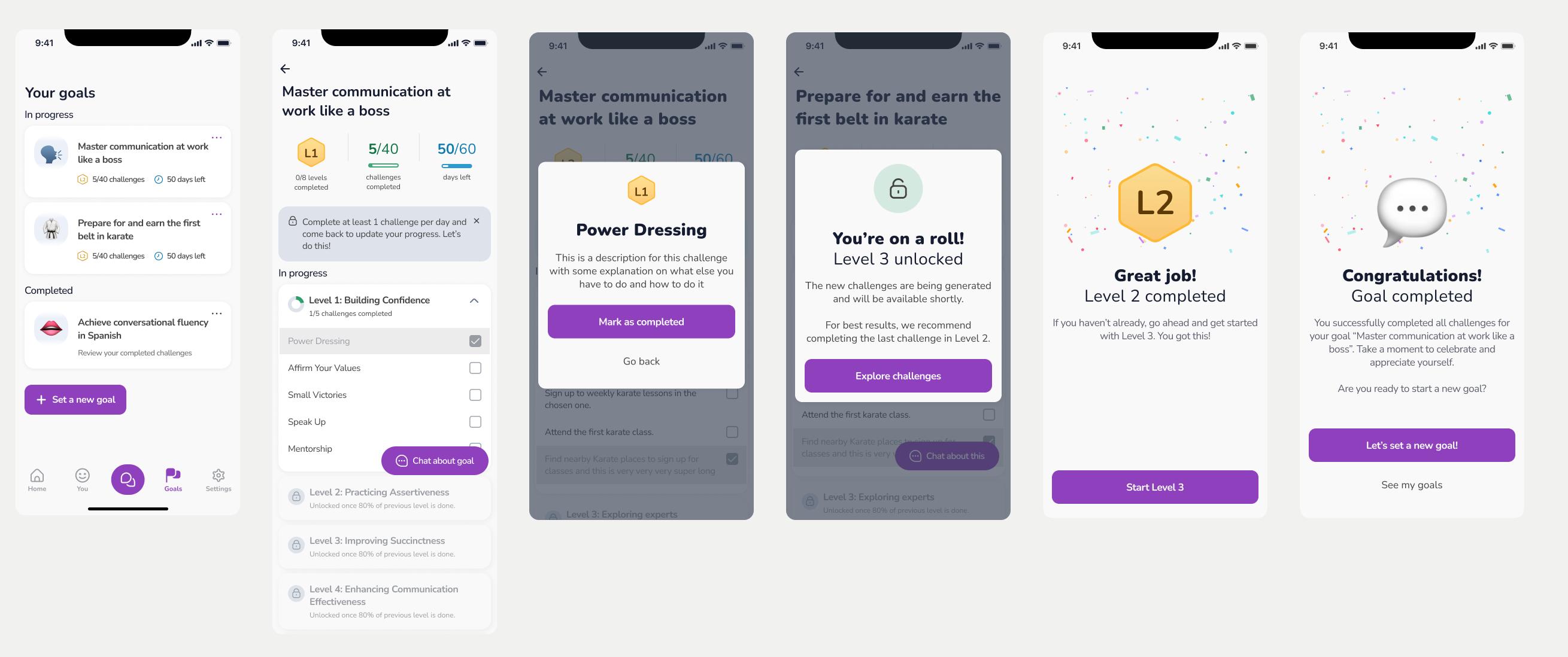
Reusable components
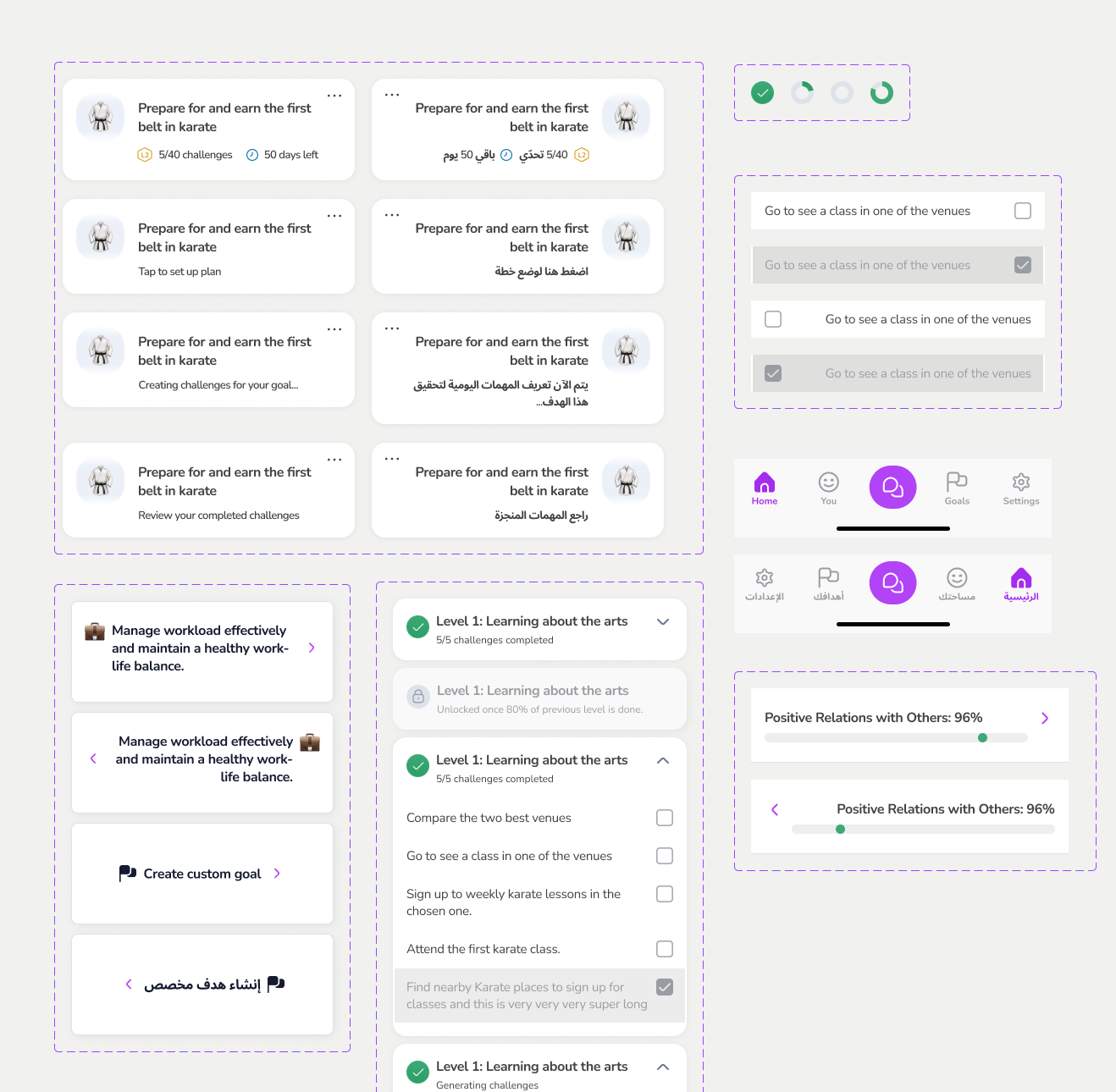
I designed a flexible set of UI components that worked seamlessly in both Arabic and English, adapting to different layouts, directions, and content needs.
What I learned
Validate perceived value early
Technical capability doesn't equal value.
Structure beats conversation
Users want progress, not open chat.
Culture is context
Privacy, collectivism, religion.
Next case study
Waverider · Mental health tracking